
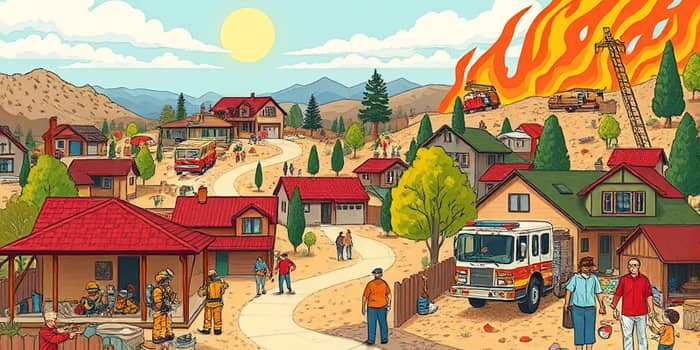
In the wake of the devastating 2025 Los Angeles wildfires, communities from Pacific Palisades to Altadena face the enormous task of rebuilding. These blazes, known as the Eaton and Palisades Fires, consumed nearly 40,000 acres, claimed 27 lives, and destroyed 12,000 structures. With economic losses estimated at up to $250 billion, the road to recovery demands coordinated funding and unwavering hope. This article explores the major sources of relief, highlights practical support strategies, and offers guidance for fostering resilience in wildfire-impacted communities.
The Scope of the 2025 Los Angeles Wildfires
Between January and March 2025, the Eaton and Palisades Fires swept through Greater Los Angeles with unprecedented ferocity. Entire neighborhoods turned to ash, while residents fled under an orange sky. The combined damage—far exceeding previous regional disasters—underscored the urgent need for a comprehensive recovery framework that addresses immediate needs and long-term rebuilding.
The human toll was heartbreaking: 27 fatalities, tens of thousands displaced, and families left searching for answers. Early estimates placed direct economic losses between $76 and $131 billion, with insured losses up to $45 billion. Beyond dollars and cents, survivors confronted trauma, displacement, and the daunting challenge of rebuilding homes and livelihoods.
Coordinated Funding for Immediate Relief
State and local agencies moved swiftly to bridge gaps in emergency aid. Governor Gavin Newsom authorized $2.5 billion in bridge funding from California’s Economic Uncertainties Reserve for shelters, hazardous waste removal, air quality testing, and expedited rebuilding permits. Los Angeles County contributed $23.4 million to support small businesses, nonprofits, and workers facing disruption.
- $2.5 billion bridge funding for shelters and safety.
- $23.4 million for small businesses, nonprofits, and workers.
- $62.6 million in CAL FIRE prevention grants.
- Over $48 million from Proposition 4 for regional mitigation.
- $4.6 million from Sierra Nevada Conservancy for hazard reduction.
These infusions enabled rapid debris removal, temporary housing, and critical safety measures—laying a foundation for more sustained recovery efforts.
Federal Programs Powering Recovery
At the federal level, multiple agencies deployed resources to bolster firefighting, relief, and long-term rebuilding. A new combined operations account for the U.S. Forest Service reached $6.55 billion, ensuring frontline firefighters receive support and equipment. The Department of Interior allocated $383.7 million for suppression and research, while SBA disaster loans offered $3.1 billion in assistance to homeowners and business owners.
Despite these substantial allocations, wildfire recovery struggles for parity with hurricane relief. FEMA’s Individual Household Program and HUD’s CDBG-DR remain chronically underfunded for wildfire disasters, averaging only $13,250 per survivor compared to $5,693 across all disaster types. Advocates urge Congress to enact the Disaster Resiliency and Coverage Act of 2025, which would provide tax-free $10,000 grants for mitigation projects, bolstering community preparedness.
Community and Philanthropic Efforts
Nonprofit organizations and philanthropic foundations have played a pivotal role in filling funding gaps and addressing human needs. The Center for Disaster Philanthropy’s California Wildfires Recovery Fund has granted over $2.75 million, recently awarding $1.56 million to support mental health services, case management, and workforce protections.
- $750K to Pasadena Community Foundation for housing rebuilding.
- $300K to National Day Laborer Organizing Network for job centers.
- $200K to Vibrant Emotional Health for recovery training.
- Millions raised by FireAid concerts, though some funds were diverted.
Local recovery groups and grassroots coalitions ensure relief is equitable, prioritizing immigrants, low-income families, and disadvantaged neighborhoods. Their community-driven recovery initiatives foster trust, accountability, and sustainable outcomes.
Rebuilding Lives Through Targeted Services
- Immediate emergency response and shelters
- Behavioral and mental health support
- Housing, infrastructure, and case management
- Economic recovery and workforce development
- Mitigation and future risk reduction
- Long-term coordination and advocacy
Effective recovery requires a phased approach. In the wake of the fires, evacuation centers and tax deadline extensions provided immediate relief. Meanwhile, mental health programs deployed Psychological First Aid training and crisis hotlines, addressing trauma in affected populations.
Housing and infrastructure rebuilding efforts—managed by nonprofits such as Altadena Build Back—expedite permits and implement hazard safety measures. SBA loans and small business grants sustain the local economy, ensuring entrepreneurs and workers return to their livelihoods with dignity.
Finally, mitigation grants fund fuel reduction projects, tree replanting, and home hardening efforts that adhere to IBHS Wildfire Prepared Home standards. These measures not only protect lives and property, but also restore community confidence and resilience.
Addressing Challenges and Shaping Policy
Despite ample funding streams, recovery efforts face significant challenges. Emergency supplements dominate suppression budgets, leaving mitigation underfunded. Misallocation of charitable contributions—such as FireAid funds directed to unrelated causes—erodes donor trust and delays essential services.
Insurance premiums soar, threatening insurability in high-risk zones. Advocates call for incentives that support home hardening and fire-resistant construction, ensuring policies remain affordable. At the federal level, wildfire relief struggles for equitable treatment within FEMA and HUD programs, perpetuating funding disparities with other disasters.
Political tensions further complicate recovery. While the Biden administration pledged 100% reimbursement for state expenses, threats to withhold funds over unrelated policy disputes undermine local planning. Stakeholders urge lawmakers to solidify the Wildfire Suppression Operations Reserve Fund and enact sustained mitigation funding beyond FY2027.
Looking Ahead: Building Resilience for the Future
The 2025 Los Angeles wildfires stand as both a tragedy and a catalyst for change. By combining governmental resources, philanthropic generosity, and community leadership, survivors can rebuild stronger, safer neighborhoods. Enacting the Disaster Resiliency and Coverage Act, expanding Proposition 4 investments, and prioritizing equity will ensure that every resident has the tools to recover.
Together, we can turn devastation into a testament of solidarity and determination. Through shared vision and strategic investment, the cities and communities of Greater Los Angeles will not only recover—they will lead the nation in wildfire resilience and innovative disaster recovery.
References
- https://disasterphilanthropy.org/press/center-for-disaster-philanthropy-continues-to-support-communities-recovering-from-la-wildfires-with-1-56-million-in-new-grants/
- https://www.taxpayer.net/disaster/congress-passes-fy2026-wildfire-funding-bill/
- https://insurancenewsnet.com/oarticle/l-a-wildfire-rebuilding-effort-draws-billions-in-aid-grants
- https://calmatters.org/digital-democracy/2025/01/la-fires-relief-legislature/
- https://carnegieendowment.org/emissary/2025/01/la-california-wildfires-disaster-recovery
- https://wildfiretaskforce.org/californias-wildfire-task-force-continues-nation-leading-efforts-to-protect-communities-unveils-new-tools-and-data/