
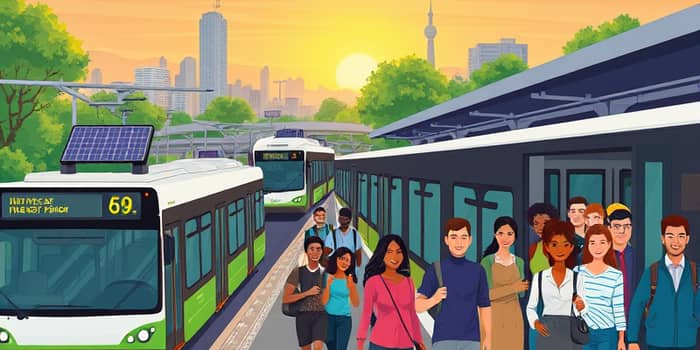
Public transportation subsidies serve as a cornerstone for reliable and widespread transit access. By covering operational costs, capital investments, and revenue shortfalls, federal funding mechanisms ensure that fare prices remain within reach for millions of riders. These financial supports transform the daily experience of commuters, while fostering broader economic growth, environmental sustainability, and equitable service delivery across urban and rural communities alike.
Over the past decade, public transit has navigated shifting ridership patterns, fluctuating budgets, and emerging technologies. The federal government plays a central role in shaping this landscape, allocating funds through annual appropriations, competitive grants, and supplemental relief packages. In this article, we explore how these resources evolve, the tangible benefits they deliver, and the investments required to build world-class systems for the future.
Understanding Federal Funding Mechanisms
The federal commitment to public transit spans decades, with regular annual aid averaging one-sixth of $79 billion total spending in 2019. Under the Infrastructure Investment and Jobs Act (IIJA, 2021), formula grants and Capital Investment Grants rose by 42%, increasing annual support from $13 billion to $18 billion through 2026. Advances in financing subsidies such as tax-exempt bonds, direct loans, and credit support further reduce borrowing costs for agencies of all sizes.
Beyond formula allocations, IIJA added $13 billion for new competitive programs tailored to national priorities and equity-focused investments. The National Infrastructure Project Assistance program directs $5 billion toward projects of regional significance, while Local and Regional Project Assistance dedicates $8 billion to communities with high poverty rates, setting aside at least 1% for areas experiencing severe economic hardship.
Historically, since the Intermodal Surface Transportation Efficiency Act of 1998, inflation-adjusted federal transit spending averaged $14 billion annually. Approximately two-thirds of that total has funded capital expenditures—such as new vehicles, track replacement, and station upgrades—while the remaining share underwrites operations and maintenance. State infrastructure banks and innovative loan guarantees complement direct federal aid, offering low-interest financing that accelerates project delivery at the local level.
Economic Impacts and Societal Benefits
Investing in transit yields significant returns beyond moving people from point A to B. Studies estimate that each $1 billion invested supports approximately 41,400 jobs per billion dollars invested, with associated worker incomes exceeding $1 billion and tax revenues topping $250 million. Subsidies also generate safety and operational efficiencies, translating into $550 million in safety benefits for every billion dollars spent.
- Household savings of $6,624 annually per vehicle removed
- Per-trip savings for transit users projected at $10.9 billion by 2045
- National car operating cost savings estimated at $30.9 billion by 2045
- Voter approval rates up to 80% for transit measures in 2022
These figures illustrate a powerful return on investment. For individuals, reduced car ownership lowers expenses on fuel, insurance, and maintenance. At the community level, transit-delivered mobility strengthens local economies by connecting workers to jobs, students to schools, and customers to businesses. Public health also benefits from reduced traffic accidents and cleaner air, underscoring transit’s role in building resilient urban environments.
Ridership Trends and Usage Patterns
Public transit ridership rebounded to 85% of pre-pandemic levels in 2024, totaling 7.7 billion trips—a 7% increase over the previous year and a 25% jump since 2022. Bus services led this recovery, posting a 17-point gain between 2023 and 2024. Rail modes, including commuter, light rail, and subways, followed closely as downtown areas reopened and travel patterns normalized.
Transit also plays an essential role beyond typical commuter flows. Specialized demand-response services facilitated medical appointments for an estimated 120.3 million trips in rural regions during 2025. Leisure and tourism trips further underscore the sector’s versatility. Despite this diversity, funding imbalances remain: the ten largest agencies handle 61% of all trips but receive only 36% of federal outlays, creating disparities in per-rider subsidy levels that can disadvantage smaller systems.
Challenges Exposed by the Pandemic
The COVID-19 crisis precipitated a nearly 40% drop in fare revenue between 2019 and 2020, threatening service continuity and long-term investment plans. Congress and the Treasury responded with one-time supplemental appropriations approaching $70 billion from 2020 to 2021—equivalent to 132% of 2018 operating costs for urban transit agencies. State and local Coronavirus Relief Funds added another $150 billion of indirect aid, enabling agencies to maintain essential routes and implement health and safety protocols.
However, pandemic-era support programs often underwrote short-term needs. As temporary infusions expire, transit providers face operating budget gaps, deferred capital projects, and workforce shortages. Healing these fractures demands a concerted federal, state, and local policy agenda that aligns emergency aid with sustainable, predictable funding streams.
Future Investment Needs and Emerging Trends
Looking ahead, analysts estimate that fulfilling the vision of world-class transit in the United States requires $4.6 trillion over the next 20 years—an annual commitment of $230 billion. This investment would primarily target fleet expansion, network extensions, signal modernization, and accessibility improvements across 452 urbanized areas that represent 65% of the U.S. population.
- Shift to electric buses and MaaS adoption
- Upgrades to rail signals, stations, and maintenance facilities
- Digital payment systems and real-time passenger information
- Equity initiatives for underserved urban and rural regions
Transitioning to zero-emission vehicles under emerging clean-air mandates introduces high upfront costs, requiring transit agencies to invest in charging infrastructure, depot retrofits, and workforce training. The 2026 APTA Surface Transportation Authorization scenario underscores the need for integrated federal grants and formula funding to scale these initiatives effectively.
Equity and Sustainability: Bridging Gaps
Subsidies play a central role in addressing disparities across income levels and geographies. Targeted grants ensure that low-income neighborhoods receive equitable investment, while rural transit extends essential mobility for medical appointments, education, and employment. By prioritizing poverty-impacted project assistance, federal policy reinforces the social compact that everyone deserves dependable and affordable transportation options.
Furthermore, the growing emphasis on sustainable practices—such as ZEV fleets and recycled material procurement—aligns transit systems with broader environmental goals. Coordinated planning across agencies, utilities, and community stakeholders can maximize both environmental and social returns on every subsidy dollar spent.
Building World-Class Transit for the Next Generation
Realizing an integrated, high-performance system demands collaboration among federal, state, and local entities. Leveraging competitive grants alongside robust formula funding can accelerate transformative projects—from major rail extensions in dense corridors to unified Mobility as a Service platforms that blend rideshare, bike-share, and microtransit. Public support, as evidenced by historic ballot measure success, provides momentum to expand networks, enhance service frequency, and embrace innovation.
Comparative studies highlight that U.S. funding currently lags behind peer nations, where per capita transit spending often exceeds American levels by two to three times. Closing this gap will require sustained advocacy, policy reforms, and smarter financing mechanisms that unlock private capital alongside public dollars.
Conclusion
Public transportation subsidies represent more than fiscal transfers; they embody a commitment to mobility, equity, and sustainable growth. By maintaining and expanding investments, policymakers can foster resilient, world-class transit systems that empower communities, reduce emissions, and drive economic opportunity. The path forward hinges on sustained federal support, thoughtful policy design, and a shared vision of accessible commute options for all—unlocking a future where every journey strengthens the social fabric and environmental health of our nation.