
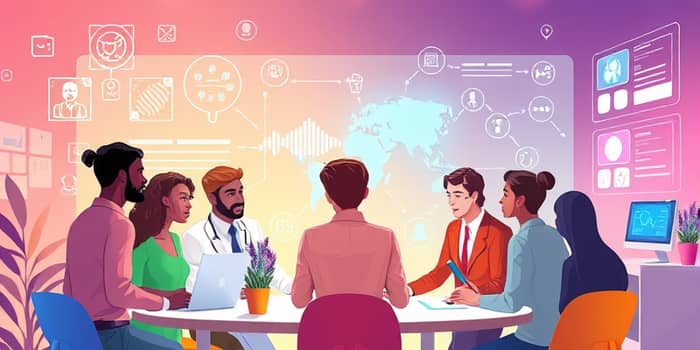
In an era defined by rapid technological change, the modern workforce faces unprecedented challenges and opportunities. Automation, artificial intelligence, and shifting economic landscapes demand that companies and employees alike embrace a culture of continuous learning. The data is clear: by 2030, 59% of workers will need new skills to thrive. As careers evolve at lightning speed, organizations must implement robust training strategies to avoid skill gaps and empower their teams. Without decisive action, hardworking individuals risk being sidelined, and businesses could struggle to innovate.
The Urgent Need for Reskilling
Between 2025 and 2030, nearly 39% of core skills will transform or become obsolete. Employers clearly understand the challenge—85% plan to prioritize reskilling initiatives this decade. Yet only 61% of workers have access to formal training. In practice, execution lags intention. Companies often provide one-off workshops rather than integrated development journeys, leaving employees to navigate gaps on their own.
Strategic upskilling plans can bridge this divide. Organizations that invest in continuous development reap significant benefits: a 218% increase in revenue growth and 24% higher profit margins. These programs reduce skill turnover and foster a loyal workforce. Nevertheless, 11% of employees currently face the threat of missing essential training windows, placing them at risk of skill obsolescence and decreased employability.
- 29% of workers need upskilling in their current roles
- 19% must be redeployed internally to leverage new skills
- 11% are at risk of falling behind without targeted training
Embracing AI and Technological Integration
The rapid adoption of AI has reshaped business operations across sectors. Today, 78% of companies use artificial intelligence in some capacity, driving demand for professionals with AI fluency. These experts command salaries up to 56% higher than their peers, yet the supply remains limited. Human resources leaders report that 92% expect AI to play a greater role in daily operations, while 84% anticipate intensive AI skills training programs.
AI-driven learning platforms deliver personalized content tailored to each individual’s pace, preferences, and performance. They offer adaptive microlearning modules, real-time feedback loops, and automated assessments that pinpoint skill gaps. By end of 2026, 71% of learning professionals will leverage these tools to reduce time-to-competency and boost learner engagement.
- Adaptive microlearning modules powered by AI algorithms
- AI-driven performance analytics for targeted interventions
- Machine learning-based skill gap assessments for timely upskilling
Integrating AI into training not only enhances efficiency but also democratizes access to learning resources, enabling employees at all levels to advance their careers without geographic or scheduling constraints.
Effective Training Methods
Blended learning—combining instructor-led sessions with digital experiences—has emerged as the gold standard. Research shows that on-the-job training engages 65-68% of participants, while coaching and mentoring attract 57% of learners. Job shadowing programs support 41% of learners, offering immersive experiences that connect theory to daily tasks.
At the same time, 70% of employees prefer online, self-directed learning, and 58% choose self-paced modules that fit busy schedules. When organizations deploy enterprise learning management systems, they can cut training time by 40-60% and boost knowledge retention by up to 60%. Moreover, employees gain both hard technical skills and critical soft skills such as communication, problem solving, and adaptability.
Integrated learning ecosystems that combine these approaches foster a sense of mastery and confidence. Learners tackle real-world projects under expert guidance, then reinforce knowledge through online simulations and peer forums. This multifaceted approach ensures that new competencies are deeply embedded and immediately applicable.
- Hands-on practice through real-world simulations
- Peer-to-peer collaboration and knowledge sharing
- Structured feedback loops with measurable milestones
Programs That Deliver Results
Across diverse industries, leading organizations partner with training providers to launch high-impact initiatives. Apprenticeship programs, a time-honored pathway into skilled trades, have expanded 40% since 2017, reaching new sectors like healthcare, IT, and education. Participation has grown from 374,000 to 519,000 active apprentices, laying the groundwork for a million strong by 2025.
Generation Training focuses on equipping participants with both technical and soft skills, yielding an 83% employment rate within six months and a sustained 76% placement rate over five years. Fast-track IT programs leverage microlearning and AI to onboard workers into support and cybersecurity roles within three to four months—a fraction of the time required for traditional degrees.
Combined with $94 million in federal grants and a corporate LMS market valued at $14.43 billion in 2025, these programs underscore a nationwide commitment to workforce transformation.
Future-Proofing Your Workforce
To remain competitive, companies must build an agile talent strategy rooted in continuous learning. That begins with cultivating a lifelong learning culture where employees feel motivated and recognized for growth. Transparent career pathways, hybrid learning options, and equitable pay structures are critical to attracting talent across four generations.
Regular skills audits backed by data analytics enable organizations to forecast needs and adapt curricula in real time. By embedding microlearning modules and peer mentoring into daily workflows, businesses ensure that development is ongoing rather than episodic. This approach helps employees stay engaged and prepared for emerging roles.
Future-focused leaders understand that workforce resilience stems from empowerment. By investing in dynamic upskilling ecosystems, organizations can pivot quickly in response to market shifts, reduce talent shortages, and foster a sense of shared purpose.
Action Steps for Leaders
Translating vision into action involves a clear roadmap:
- Conduct a comprehensive skills gap analysis to identify priority areas
- Collaborate with educational institutions and accredited training providers
- Leverage government and industry grants to offset program costs
- Implement mentorship networks and peer coaching initiatives
- Measure progress through learning analytics and adjust strategies accordingly
Successful leaders recognize that investment in people yields exponential returns. By embedding learning into organizational DNA, they not only elevate performance but also cultivate a loyal, innovative workforce poised to meet future challenges.
Conclusion
Our world demands adaptability and resilience. As technology reshapes industries, strategic workforce development becomes essential to thrive. Companies that embrace comprehensive upskilling strategies unlock human potential, enhance productivity, and drive sustainable growth.
When employees feel empowered to learn and advance, they become champions of innovation. Together, organizations and individuals can build a future where continuous learning is not just an option but a way of life—ensuring that every worker and every business flourishes in the decades to come.
References
- https://socialfinance.org/insight/reaching-one-million-active-apprentices-starts-with-retention-and-investments-in-the-right-supports/
- https://www.d2l.com/blog/employee-training-statistics/
- https://ccitraining.edu/blog/it-workforce-training-2026/
- https://www.generation.org/news/5-workforce-trends-reshaping-hiring-strategy-in-2026-and-how-to-get-ahead/
- https://leveluplms.com/key-employee-training-statistics-data-driven-trends-for-2026/
- https://parwcc.com/parwcc-2026-u-s-job-market-outlook-stability-skills-and-sector-splits-ahead-2/
- https://educate360.com/industry-insight/2026-workforce-skills-trends-report/
- https://addisongroup.com/insights/national-hiring-trends-workforce-planning-guide-2026/
- https://www.manufacturingmomentum.org/insight/top-5-training-trends-to-watch-in-2026/
- https://www.shrm.org/about/press-room/what-will-work-look-like-in-2026--new-shrm-research-reveals-how-
- https://strategichrinc.com/top-trends-in-training-for-2026/
- https://hbr.org/2026/02/9-trends-shaping-work-in-2026-and-beyond
- https://thetasmart.com/employee-training-trends-in-usa/
- https://www.mercer.com/insights/people-strategy/future-of-work/global-talent-trends/
- https://www.aseonline.org/News-Events/ASE-News/EverythingPeople-This-Week/key-hiring-trends-expected-to-shape-2026