
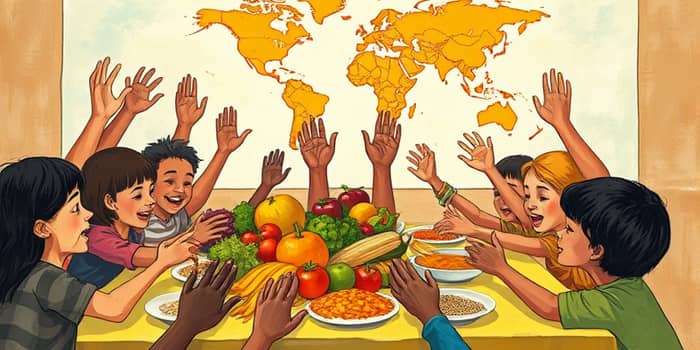
As the world grapples with unprecedented levels of hunger and malnutrition, coordinated efforts at both global and domestic levels have never been more critical. This article explores the landscape of food assistance, highlights innovative solutions, and offers practical guidance for those seeking to understand and engage with these vital programs.
Global Food Insecurity: An Unfolding Crisis
Today, an estimated 318 million people face acute hunger, double the number before the pandemic. The specter of famine looms in multiple regions, with two simultaneous famines declared in Gaza and parts of Sudan. Across 16 hotspots—ranging from Haiti and Mali to Yemen and Syria—millions endure severe food shortages.
Conflict remains the primary driver of this crisis. Indeed, conflict drives sixty-nine percent of hunger, tearing apart supply chains and livelihoods. Climate-related shocks—droughts, floods, and storms—compound the problem. In Syria, crop production has plummeted by 60 percent, while Hurricane Melissa devastated communities across Jamaica, Haiti, and Cuba.
- Extended lean seasons in key countries
- Rising food prices and economic downturns
- Persistent micronutrient deficiencies, or hidden hunger
The combined forces of war, weather, and market instability have pushed 295 million people into acute food insecurity—the highest figure since 2016. Behind these numbers are families struggling to feed their children, communities losing hope, and the very fabric of society under threat.
International Food Aid Initiatives
Leading the global response, the World Food Programme (WFP) aims to assist 110 million people in 2026 with a US$13 billion operational requirement. Leveraging AI tools like SCOUT for optimized supply chains and digital cash transfers, WFP has shown that every dollar invested saves seven in future relief costs.
U.S. international assistance also plays a pivotal role. The Emergency Food Security Program (EFSP) provides market-based aid, expanding to US$2.9 billion in FY2024. However, other commodity-focused initiatives such as Food for Peace and the McGovern-Dole Program face potential elimination in the FY2026 budget request.
These programs, combined with bilateral and multilateral partnerships, form the backbone of emergency relief. Yet funding shortfalls—projected at 65 percent globally—threaten to undermine progress. An 83 percent cut by the U.S. in humanitarian support, mirrored by reductions in European and Nordic contributions, could leave 58 million people at risk of losing critical aid.
Innovations and Collaborations
Despite daunting challenges, innovation offers rays of hope. WFP’s anticipatory action framework uses early warning analytics to preposition food before crises peak. Mobile money platforms enable rapid, dignified cash transfers, empowering recipients to choose their own diets.
- AI-driven logistics for streamlined delivery
- Digital vouchers to support local markets
- Nutrition-sensitive programming addressing micronutrient gaps
Addressing hidden hunger is equally vital. Billions suffer from micronutrient deficiencies that stunt growth, weaken immunity, and perpetuate poverty. By fortifying staple foods and promoting dietary diversity, aid agencies aim to combat micronutrient deficiency weakens health and growth alongside hunger.
U.S. Domestic Assistance: The SNAP Lifeline
On home soil, the Supplemental Nutrition Assistance Program (SNAP) remains a cornerstone of social safety nets. Formerly known as Food Stamps, SNAP provides monthly benefits to low-income households, ensuring access to nutritious groceries.
Eligibility criteria vary by state but generally require proof of residency, citizenship or lawful presence, and income within specified limits. A typical household must meet gross income thresholds set at 200 percent of the federal poverty level, with net income considerations and resource tests applied.
- Residency and citizenship verification
- Income limits tied to federal poverty guidelines
- Resource tests excluding most assets
- Work requirements for able-bodied adults without dependents
During financial crises, SNAP expands access through expedited benefits, delivering food assistance within seven days for those with minimal income and resources. Yet rising caseloads have strained administrative capacity and local food banks, highlighting the need for sustained investment and modernization.
Challenges and Policy Shifts
Despite demonstrated successes—USAID programs have saved an estimated 90 million lives over two decades—funding cuts and policy shifts jeopardize hard-won gains. The proposed elimination of commodity programs in the U.S. budget, combined with scaled-back global contributions, could reverse progress.
Moreover, evolving eligibility rules threaten vulnerable populations, including veterans, formerly incarcerated individuals, and recent refugees. Without concerted advocacy, millions may face sudden benefit losses and heightened food insecurity.
65 percent funding shortfalls for programs underscore the urgency of collective action. Governments, civil society, and private sector partners must bridge gaps, innovate procurement, and champion policies that uphold the right to food.
Building a More Resilient Future
As we confront complex, interlinked crises, the path forward demands solidarity, creativity, and unwavering commitment. Ensuring access to nutritious food is not merely an act of charity—it is a foundation for dignity, health, and sustainable development.
Empowering communities through cash-based aid, bolstering local agriculture, and integrating nutrition-sensitive interventions can pave the way to resilience. By centering dignity and respect for every recipient and promoting holistic nutrition beyond mere calorie counts, we honor the humanity at the heart of this mission.
Now more than ever, individuals and institutions must lend their voices and resources. Together, we can transform data into decisive action, break the cycles of hunger, and build a world where every person has the nourishment they need to thrive.
References
- https://www.wfp.org/publications/wfp-global-outlook
- https://benefitscheckup.org/program/nutrition_va_snap_program
- https://www.thinkglobalhealth.org/article/feeding-dignity-a-2026-blueprint-for-food-aid-in-a-divided-world
- https://www.dss.virginia.gov/benefit/snap.cgi
- https://fews.net/global/food-assistance-outlook-brief/march-2026
- https://www.dss.virginia.gov/benefit/snap/SNAP_work_faqs.cgi
- https://www.worldbank.org/en/topic/agriculture/brief/food-security-update
- https://www.everycrsreport.com/reports/IF13162.html
- https://www.feedingamerica.org/our-work/hunger-relief-programs/snap