
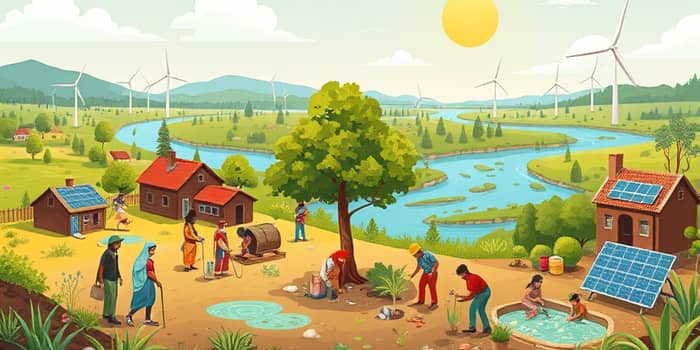
Across the United States, a transformative funding landscape is unfolding for those committed to protecting our planet. Fueled by landmark legislation such as the Inflation Reduction Act (IRA) and Infrastructure Investment and Jobs Act (IIJA), federal agencies now channel billions in grants toward community-driven solutions. From urban brownfield cleanups to rural habitat restoration, these investments are reshaping the possibilities for environmental stewardship in 2026.
At the heart of this momentum lies an integrated approach that combines federal support, private capital, and philanthropic innovation. By understanding the key programs, funding streams, and application strategies, nonprofits, tribal governments, and local municipalities can harness these resources to drive sustainable change.
A New Era of Environmental Funding
The scale of investment in environmental protection has reached historic levels, reflecting an urgent response to climate change, pollution, and ecological degradation. The Environmental Protection Agency (EPA) alone administers over $4 billion annually in grants spanning air quality, water safety, waste management, and health initiatives. In fiscal year 2026, the EPA’s budget stands at an impressive over $49 billion in funding, underscoring the federal commitment to safeguarding natural systems and public health.
Meanwhile, the Department of Energy (DOE), Department of the Interior, and NOAA coordinate complementary programs that prioritize climate resilience and clean energy adoption. Tribal and state agencies receive formula grants based on legislative formulas, while competitive grants allow community groups and NGOs to propose innovative projects tailored to local needs.
Major Federal Grant Programs
Key federal programs offer targeted funding across diverse environmental priorities. Whether you are spearheading a wetland restoration or launching an environmental education campaign, understanding the nuances of each grant stream is crucial.
- EPA Brownfields Program: Up to $500,000 for site assessments, $1 million for petroleum cleanups, boosted by a $1.5 billion IIJA injection.
- Greenhouse Gas Reduction Fund: A $27 billion IRA fund supporting green banks and clean energy access in underserved communities.
- Environmental Justice Grants: Small grants of $30,000–$75,000 and partnership awards up to $1 million for collaborative projects.
- Energy Efficiency Block Grants: Formula allocations to states, tribes, and cities to reduce building emissions and energy consumption.
- USDA Conservation Initiatives: Over $8.45 billion for climate-smart agriculture and $2.5 billion for habitat restoration on federal lands.
Program Highlights Table
Private Foundations and Global Finance
Beyond federal dollars, private foundations and sustainable finance markets play a pivotal role in catalyzing environmental impact. Institutions like the Packard and Moore Foundations provide grants ranging from tens of thousands to multi-million-dollar awards for conservation science and ecosystem stewardship.
Simultaneously, the global sustainable debt market has swelled to over $1.6 trillion worldwide issuance, including $700 billion in green bonds and $255 billion in green loans. These instruments enable corporations and municipalities to fund renewable energy projects, carbon reduction strategies, and biodiversity conservation with investor backing.
Building Successful Partnerships
Effective environmental projects often hinge on collaboration across sectors. Federal and private funding bodies increasingly favor proposals that unite academic researchers, local leaders, community groups, and industry partners. By leveraging diverse expertise, projects can amplify outcomes, secure additional matching funds, and ensure long-term sustainability.
Case studies abound: in California, a coalition of tribal councils and universities mobilized $5 million in EPA and foundation grants to restore native wetlands, creating wildlife corridors and sequestering thousands of tons of carbon annually. Such initiatives illustrate the power of cross-sector collaboration and community engagement.
How to Access and Apply
Navigating grant applications can be daunting, but strategic planning and targeted resources make the process manageable. Key steps include:
- Identify grant programs aligned with your mission and geographic eligibility.
- Gather baseline data on project needs, environmental impacts, and community benefits.
- Forge partnerships with academic institutions, local governments, or nonprofits to strengthen proposals.
- Develop a clear budget, timeline, and evaluation plan to demonstrate accountability.
- Review past awardees and attend workshop sessions offered by grant agencies.
- Submit applications well before deadlines, ensuring compliance with all requirements.
Many agencies offer pre-application guidance, webinars, and template materials. Engaging with program officers early can clarify expectations and increase competitiveness.
Real-World Impacts and Future Outlook
The tangible results of these investments are already evident. Across multiple states, funded projects have reduced harmful emissions, revitalized urban green spaces, and delivered educational programs that empower youth as environmental stewards. In one initiative, 6,200 local projects collectively cut over 10,000 tons of NOx, demonstrating measurable air quality improvements.
Looking ahead, the convergence of public funding, philanthropic support, and private capital promises a new chapter in environmental action. Innovations in carbon pricing, climate tech, and blended finance models will unlock additional resources for developing regions and underserved communities, bridging gaps in global sustainability efforts.
As the demand for clean energy and resilient infrastructure accelerates, organizations equipped to navigate this dynamic funding ecosystem will be at the forefront of change. By crafting compelling proposals, forging strategic alliances, and maintaining a clear vision for impact, nonprofits and local governments can transform grant opportunities into thriving environmental solutions.
In this pivotal moment, the invitation is clear: harness the power of available grants, inspire your community, and drive forward the transition to a more sustainable, equitable future. The resources are within reach—now is the time to act.
References
- https://grantmetric.com/insights/environmental-grants-2026
- https://think.ing.com/articles/sustainable-debt-outlook-2026-higher-issuance-with-changing-compositions/
- https://findgrants.io/blog/environmental-grants-green-funding-2026
- https://www.wri.org/technical-perspectives/6-opportunities-sustainable-finance-2026
- https://www.epa.gov/newsreleases/epa-seeks-applicants-environmental-education-grants
- https://corporateknights.com/responsible-investing/five-sustainable-finance-predictions-for-2026/
- https://www.spglobal.com/sustainable1/en/insights/2026-sustainability-trends
- https://www.usaspending.gov/agency/environmental-protection-agency
- https://home.cib.natixis.com/articles/2026-sustainability-outlook
- https://simpler.grants.gov/search
- https://www.schroders.com/en-us/us/institutional/insights/2026-sustainable-investment-outlook-7-key-trends-for-north-america-in-the-year-ahead/
- https://www.epa.gov/grants
- https://www.environmentalprotectionnetwork.org/ffog-march-26-2026/