
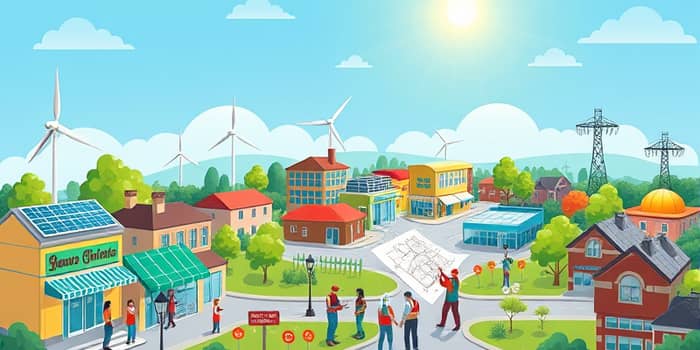
Communities everywhere are discovering that true prosperity springs from within. By harnessing local strengths and fostering collaboration, towns and cities can spark innovation, create jobs, and ensure lasting well-being for every resident. This article offers a roadmap to turn policy ideas into thriving small business ecosystems and sustainable growth.
Understanding Local Economic Development
Economic development is not a distant, abstract concept—it is the daily effort to build healthier, more resilient neighborhoods. At its core, it centers on empowering local entrepreneurs, revitalizing infrastructure, and aligning with broader federal priorities.
Instead of funneling millions into sprawling corporate subsidies, successful communities are embracing competitive RFP processes open to local firms. This approach ensures public funds translate directly into job creation, neighborhood improvements, and equitable opportunity.
Innovative Incentive Models
Traditional corporate tax breaks often fail to deliver promised returns. A more effective path lies in targeted incentives that prioritize community benefit. Consider three transformative models:
- Rethinking Business Incentives
- Tax Credits for Local Investment
- Diversified Community Investment Funds
By issuing grants through transparent RFPs, municipalities can demand detailed plans and measurable outcomes. Programs modeled after Michigan’s 50% credit on local investments have shown to generate 100- to 1000-fold more jobs per dollar spent when compared with blanket corporate breaks.
Diversified Community Investment Funds (DCIFs), as piloted in Lansing, MI, pool public, private, and philanthropic capital to redevelop blighted properties, support affordable housing, and spur small-scale manufacturing. These efforts foster diversified community investment funds that keep returns circulating locally.
Investing in Infrastructure and Federal Priorities
Robust infrastructure is the backbone of any thriving economy. Communities must align local projects with federal programs such as INFRA, BUILD, PROTECT, and CRISI for surface transportation improvements. Expanding broadband access and modernizing the energy grid unlock opportunities for rural and urban areas alike.
Initiatives like the CHIPS Act can anchor advanced manufacturing hubs, while EDA grants target job creation in distressed regions. By strategically pursuing these funds, communities build resilient economic ecosystems capable of weathering global disruptions.
2026 Economic Forecasts: A Snapshot
Understanding upcoming trends helps planners allocate resources wisely. The following table highlights key regional growth projections for 2026:
These figures underscore the vital role of metros in driving national output. Local leaders who anticipate shifts can position their communities for success by channeling resources into high-impact sectors.
Sector-Specific Growth and Workforce Development
Strategic sectors—technology, energy, manufacturing, and healthcare—are powerful engines of prosperity. The Greater Grand Rapids area expects 1,300 new tech jobs by 2025, while solar, wind, and EV infrastructure projects may create half a million public charging stations nationwide.
Manufacturing reshoring has attracted $1.2 trillion in investment, revitalizing local plants and boosting supply chain resilience. Healthcare expansions add stable, well-paying roles, especially in underserved regions.
Workforce readiness is equally critical. Communities should invest in vocational training, apprenticeship programs, and partnerships with local colleges to bridge skills gaps. Embracing 50% credits on local investments in training ensures residents can fill new positions and drive economic dynamism.
Collaboration for Resilience and Adaptation
Federal budget uncertainties—possible cuts to EDA, MEP, and CDBG—require communities to strengthen regional coalitions. By forming peer networks across counties, local economic development organizations (EDOs) can share best practices, pool grant-writing expertise, and maintain stability when funding streams fluctuate.
Establishing public–private partnerships reinforces adaptation to federal budget shifts and preserves momentum in vital projects. Local businesses, philanthropies, and civic groups become co-stewards of growth, ensuring initiatives endure beyond political cycles.
Empowering Tomorrow’s Leaders
Economic development is not solely about projects and policies—it is about people. Engaging youth, minority entrepreneurs, and underrepresented communities brings fresh ideas and energy to regional planning tables. Mentorship programs and incubators can unlock hidden talent and foster the next generation of innovators.
By deliberately designing inclusivity into every stage—grant selection, stakeholder meetings, impact assessments—communities cultivate ownership and long-term commitment. This approach builds trust, strengthens social bonds, and fuels a collective vision for the future.
A Call to Action
Your community holds the keys to its own success. Leaders, business owners, and residents must unite around clear goals: sustainable infrastructure, targeted incentives, world-class workforce development, and resilient partnerships. Through careful planning and bold collaboration, every neighborhood can become a beacon of opportunity.
Start by convening a roundtable of local stakeholders. Identify one high-impact project, secure matching funds, and publish transparent metrics for success. Celebrate early wins publicly, then scale those lessons to larger initiatives. By taking decisive steps today, your community will chart a course toward shared prosperity, leaving a legacy of innovation and inclusion for generations to come.
References
- https://mainstreetjournal.substack.com/p/top-10-state-policies-for-2026
- https://www.rightplace.org/news/the-right-place-shares-economic-outlook-for-2026
- https://www.nga.org/advocacy-communications/letters-nga/economic-development-and-revitalization-task-force-outlines-priorities-for-fy-2026/
- https://economics.td.com/state-economic-forecast
- https://www.synovus.com/corporate/insights/market-industry-insights/top-american-industries-2026/
- https://www.morganstanley.com/insights/articles/global-economic-outlook-2026
- https://www.crec.net/2025/06/what-the-fy-2026-federal-budget-proposal-signals-for-regional-economic-development/
- https://milkeninstitute.org/content-hub/research-and-reports/research-and-data-tools/best-performing-cities-2026-resilience-cooling-economy
- https://www.convergentnonprofit.com/blog/p/item/66307/2026-economic-development-trends-point-to-funding-discipline-and-broader-collaboration
- https://www.stlouisfed.org/on-the-economy/2025/dec/professional-forecasters-past-performance-outlook-2026
- https://www.brookings.edu/articles/economic-issues-to-watch-in-2026/
- https://www.spglobal.com/market-intelligence/en/news-insights/research/2026/01/top-us-regional-economic-insights-2026
- https://apps.urban.org/features/state-economic-monitor/
- https://www.bea.gov/data/gdp/gdp-by-county
- https://laedc.org/laedc-releases-the-2026-economic-forecast/