
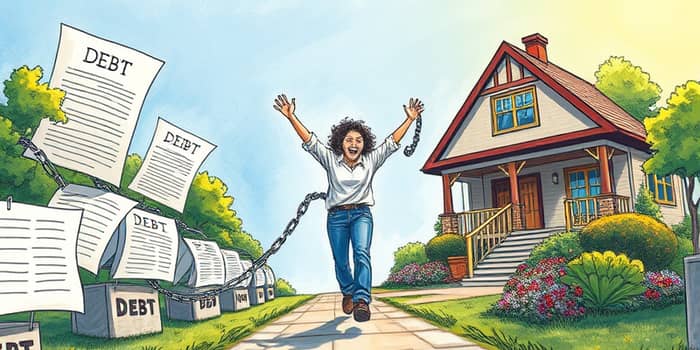
Every journey from carrying burdensome debt to unlocking the door of a dream home begins with a clear assessment and a resolute plan. This guide will equip you with actionable steps and inspiring insights to transform financial hardship into homeownership triumph.
Assessing Your Financial Starting Line
Before setting your sights on a new home, you must understand exactly where you stand. Start by listing every obligation—credit cards, student loans, personal loans—and note total amounts, interest rates, minimum payments. This transparency empowers you to craft a realistic strategy.
Review your credit report quarterly, seeking errors or outdated entries. Remember that your payment history accounts for a significant portion of your credit score, so ensure on-time payments via autopay or calendar reminders.
Next, categorize debts by interest impact: high-interest revolving balances versus lower-rate installment loans. With this perspective, you can allocate resources where they’ll have the greatest effect.
Debt Reduction Strategies
Once you understand your liabilities, choose a method to eliminate them. Two popular approaches can accelerate progress:
- Avalanche method: Tackle balances with the highest rates first to focus on highest interest rates first and save on interest charges.
- Snowball method: Pay off the smallest balances initially to build momentum and celebrate quick successes.
You can even combine tactics—pay minimums on all debts while directing extra funds toward your chosen target. To reinforce good habits, keep credit utilization below 30 percent and avoid closing old accounts.
If you feel overwhelmed, seek assistance from HUD-certified counselors or consider consolidation options like balance transfers and personal loans at lower rates. Importantly, stop adding new debt and aim to create a structured debt repayment plan you can follow each month.
Budgeting and Saving Tactics
With a reduction plan in motion, shift focus to building an emergency cushion and saving for a down payment. Design a zero-based budget that tracks every dollar of income against expenses, then identify discretionary categories—dining out, streaming services, and unused memberships—to trim.
Automate your savings by scheduling transfers the day after each paycheck. Even small transfers add up over time and reinforce consistent discipline. A simple rule of thumb: allocate a portion of freed-up funds from debt repayments toward savings to maintain momentum.
Different loan programs require varying down payments. Compare options in a simple table:
Research local grants and assistance programs; many states offer incentives for first-time buyers. By automating contributions and seeking help, you’ll reach your target sooner than you think.
The Path to Homeownership
When your credit score and savings align, it’s time to take the next steps. Follow this roadmap to ensure a smooth process:
- Evaluate finances, confirm emergency fund, and secure pre-approval with multiple lenders.
- Compare mortgage options: fixed-rate, adjustable-rate, FHA or VA-backed loans.
- Shop for homes within your budget, keeping housing expenses should not exceed thirty percent income.
- Submit offers, negotiate contingencies, and finalize closing costs and inspections.
Remember to budget for all upfront and ongoing costs: closing fees, moving expenses, property taxes, insurance, and routine maintenance. Planning ahead prevents surprises and preserves your financial stability.
Mortgage Management and Equity Growth
After closing, continue your disciplined habits. Set up autopay to avoid late fees and consider making extra principal payments when feasible. Each extra payment builds equity faster and reduces total interest paid over the life of your loan.
Keep your debt-to-income ratio low by resisting high additional borrowing. A lower DTI not only helps with future refinancing but also sets the stage for expansion of your assets.
Long-Term Financial Freedom Benefits
Owning a home is more than shelter; it’s a powerful wealth-building vehicle. Consider these advantages:
- Equity appreciation over time as home values tend to rise.
- Tax perks—deductible mortgage interest, property taxes, and sometimes PMI.
- Enhanced net worth compared to renting peers.
- Opportunity to build equity with each mortgage payment.
- Potential to leverage your home for passive income by renting rooms or a secondary unit.
These benefits create a virtuous cycle: forced savings through mortgage amortization and tax incentives that leave more cash in your pocket.
Maintaining Momentum and Building Wealth
Financial freedom doesn’t end at the front door. Explore strategies like house hacking—renting part of your property—to offset costs. As equity grows, consider a HELOC for down payments on additional properties, repeating the process every few years to build a robust real estate portfolio.
By staying committed to your budget, continuing to pay down debt, and reinvesting home equity, you’ll transform your first home into a catalyst for lifelong wealth.
From meticulous debt assessment to the day you turn your key in the lock of your dream home, each deliberate step brings you closer to true financial independence. Embrace the journey, celebrate each milestone, and enjoy the stability and comfort that come with building lasting wealth through homeownership.
References
- https://migonline.com/blog/2024/07/10/the-path-to-homeownership-steps-to-achieve-financial-freedom/
- https://www.nidhousing.com/post/how-to-prioritize-debt-while-saving-for-a-home
- https://neohomeloans.com/04/24/2023/the-straightforward-real-estate-strategy-for-financial-independence/
- https://castlegategroup.com/smart-debt-management-before-buying-a-home-a-6-12-month-roadmap/
- https://www.nchfa.com/news/home-matters-blog/how-home-ownership-can-lead-financial-independence
- https://dfpi.ca.gov/news/insights/three-steps-to-managing-and-getting-out-of-debt/
- http://www.buywisemortgage.com/mortgage-strategy-the-overlooked-key-to-financial-freedom
- https://www.achieve.com/learn/debt-basics/mortgage-debt
- https://mortgagesolutions.net/2022/05/23/homeownership-financial-freedom/
- https://www.trophysignaturehomes.com/blog/how-to-reduce-debt-to-buy-a-house-a-simple-guide
- https://www.youtube.com/watch?v=hWfqTfJV1bE
- https://biz.libretexts.org/Courses/Fresno_City_College/Personal_Finance_for_College_Students/11:_Purchasing_and_Financing_a_Home/11.03:_Managing_housing_debt_and_its_role_in_long-term_financial_planning.
- https://home.tchabitat.org/building-wealth-through-homeownership
- https://www.cmgfi.com/blog/how-debt-affects-homeownership-2023-12-28