Every dollar you spend tells a story: of savings, hopes and hard-won experience. Understanding when to invest in brand-new items and when to embrace secondhand finds can transform your financial journey. By aligning purchases with your unique life stage, you can unlock both economic and environmental benefits.
This guide explores the ebb and flow of household spending, practical strategies for savvy shopping, and the inspiring potential of sustainable choices.
Understanding the Spending Hump Across Life Stages
Consumer spending doesn’t rise in a straight line. Instead, it follows a distinct patterns across life stages, as revealed by decades of data from the U.S. Bureau of Labor Statistics. Total annual expenditures start modestly under age 25, climb steeply to a peak between 45 and 54, then taper off after retirement.
Key factors driving this hump-shaped profile of total expenditures include household size, career progression and shifting priorities. Young singles focus on essentials, mid-lifers balance family expenses and big-ticket items, and retirees streamline spending while prioritizing healthcare and leisure.
New vs. Used: Weighing Costs, Quality, and Sustainability
Choosing between new and used hinges on weighing immediate costs against long-term value. Used items typically cost 50-75% less than brand-new, opening opportunities to stretch limited budgets and reduce waste. However, new purchases often carry warranties and modern safety features that secondhand goods cannot match.
Consider the environmental impact, too. Every reused gadget or article of clothing keeps products out of landfills and conserves raw materials. On the other hand, buying new supports innovation and can deliver reliability where it matters most.
Aligning Purchases with Your Life Stage
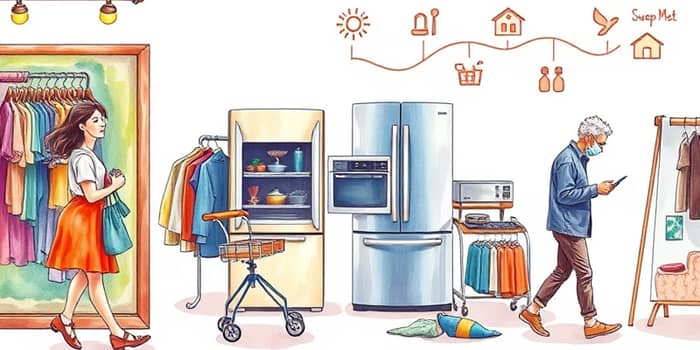
Life stages bring changing priorities. By matching your buying approach to where you are on your personal timeline, you can optimize spending and satisfaction.
Practical Tips for Savvy Shoppers
Whether you’re just starting out or entering your golden years, these actionable steps will sharpen your buying decisions and bolster your budget:
- Set a clear budget for each purchase and stick to it.
- Inspect secondhand items carefully and opt for certified refurbished from trusted sellers.
- Prioritize high-risk purchases—like car seats or helmets—as brand-new for guaranteed safety.
- Use mobile apps, online marketplaces and community swaps to compare prices and conditions.
- Keep a repair fund for unexpected maintenance on used goods.
- Track your spending patterns quarterly to adjust your buying mix as needed.
Embracing Sustainability and Financial Well-Being
Beyond personal finance, choosing used items fosters a deeper connection to the planet and community. By reusing and repurposing, you embrace eco-conscious buying habits that cut resource consumption and landfill waste. You also join a growing movement that values circular economies over throwaway culture.
Financially, this habit builds resilience. When you learn to see value in pre-owned goods, you sharpen your instincts for recognizing quality and longevity. You become less susceptible to impulsive spending and more attuned to your true needs.
Conclusion: Your Spending, Your Story
Your financial journey is uniquely yours, shaped by career milestones, family decisions and evolving goals. By understanding the life-cycle of spending and aligning your purchases—new or used—you gain clarity, confidence and control.
Start today: audit your upcoming buys, decide which warrant a brand-new purchase and which can thrive in a secondhand form. With each informed decision, you not only enrich your own life but also contribute to a more sustainable and equitable world.
References
- https://academic.oup.com/jcr/article/22/1/27/1808110
- https://www.flextalk.org/buying-new-or-buying-used-what-can-you-afford/
- https://papers.ssrn.com/sol3/papers.cfm?abstract_id=362064
- https://earth911.com/home-garden/shift-to-thrift-buying-second-hand-versus-new/
- https://living.geico.com/saving/money/buying-used/
- https://smartasset.com/personal-finance/new-vs-used-8-things-youre-better-off-buying-secondhand
- https://mitmgmtfaculty.mit.edu/japarker/consumption-life-cycle/
- https://www.merecyclers.com/new-or-used-4-reasons-why-you-should-shop-second-hand/
- https://www.nber.org/papers/w9382
- https://themaverickobserver.com/new-vs-used-dollars-sense-when-to-buy-used/
- https://www.aeaweb.org/articles?id=10.1257%2Fjep.15.3.3