
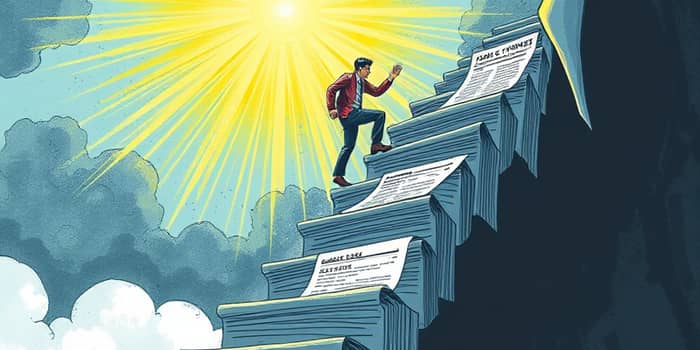
Falling behind on loan payments can induce fear and uncertainty. But with knowledge, strategic planning, and proactive communication, you can navigate the path from missed payments to renewed stability. This guide unpacks each phase of loan default and introduces practical strategies to regain control of your financial future.
Whether you manage a student loan, auto financing, mortgage, personal credit, or business debt, understanding how delinquency transitions to default empowers you to take decisive action. Let’s explore the journey ahead and the tools you need to emerge stronger.
Delinquency vs. Default: Understanding the Difference
When a scheduled repayment is missed, the loan first enters a state of delinquency. This grace period between missed payment provides borrowers and lenders an opportunity to rectify the situation before severe penalties ensue.
Delinquency durations vary by loan type: consumer mortgages often allow 30 days, while some business loans extend up to 90 days. If payments remain outstanding beyond the specified period, the lender may declare a default, accelerating the remaining balance.
Warning signs of impending default include repeated missed notices, increasing collection calls, and escalating account statements. Recognizing these signals early can help you avoid default and protect credit by seeking assistance before escalation.
Timelines by Loan Type
Each loan category has distinct timeframes for reporting late payments and declaring default. Refer to the table below to understand when your accounts could face serious actions:
Understanding these deadlines can guide timely outreach to your lender, reducing the risk of default and negative credit entries.
Immediate Consequences for Borrowers
Once a loan defaults, the repercussions extend far beyond a single missed payment:
- Significantly damages credit scores, hindering future borrowing potential.
- Mounting fees as accumulated interest costs spiraling out increase overall debt.
- Risk of wage garnishment or liens on property following legal judgments.
- Emotional stress impacting well-being and personal relationships.
Default records remain on credit reports for up to seven years, but consistent positive actions can gradually rebuild your score. The first step is to assess the full scope of your obligation, including any collection or attorney fees added to the principal.
Fear of the unknown often magnifies the impact of default. By familiarizing yourself with the process and potential outcomes, you reduce anxiety and position yourself as an active participant rather than a passive victim of circumstance.
Lender Response and Legal Procedures
Lenders must follow a structured legal framework before enforcing defaults. Understanding this process offers insight into timelines and possible negotiation windows.
Initial actions include sending a notice of default that clearly outlines the past-due amount and a deadline to cure the breach. If this deadline passes, the lender may accelerate the loan, making the entire remaining balance immediately due.
At this stage, many lenders send a reservation of rights letter to formally preserve your rights under contract and prevent unintentional waiver of their collection powers. For secured loans, such as auto or mortgage, lenders can then proceed with collateral repossession and asset seizure, though state laws and contract language dictate permissible timelines and methods.
In unsecured cases, debts are commonly transferred to third-party collection agencies. These agencies may pursue lawsuits, leading to court judgments, wage garnishments, and bank levies to recover outstanding balances.
Strategies for Recovery and Negotiation
Default does not have to be the final chapter of your financial story. Engaging lenders early and earnestly can unlock relief options.
- Initiate contact: Inform your lender of your situation and discuss possible accommodations.
- Request loan modification: Adjust payment terms, interest rates, or installment schedules.
- Implement payment plans: Structured agreements can gradually bring accounts current.
- Leverage hardship programs: Federal student loans, for example, offer rehabilitation and deferment pathways.
Story: Javier, an entrepreneur, fell behind on a small business loan after unexpected medical bills. By presenting a six-month cash flow projection and proposing adjusted payments, he convinced his lender to pause collections and work on a customized plan. Today, his business thrives and his debt restructured.
Options for Borrowers in Default
If default has already occurred, you still have recourse:
- Enrolling in a federal rehabilitation program removes default status after nine on-time payments within ten months.
- Loan consolidation merges multiple debts into one, easing management and potentially lowering rates.
- Debt settlement negotiations can reduce total amounts owed, though may have credit implications.
- As a last resort, bankruptcy offers structured relief under Chapters 7 or 13 but carries long-term credit trade-offs.
Professional assistance from credit counselors or bankruptcy attorneys can clarify the best path. Remember, every default has a redeeming strategy, and aligning with knowledgeable advisors boosts success rates.
Emotional Resilience and Practical Tips
The emotional impact of financial hardship can be as challenging as its monetary consequences. Building resilience helps you make rational choices and maintain mental health.
Consider establishing a realistic budget that tracks income versus essential expenses. Seek support from friends, family, or peer groups to share experiences and solutions. Practice mindfulness or journaling to manage stress and maintain focus. Regularly reviewing credit reports and account statements to spot changes or errors can also empower you.
Key Takeaways and Best Practices
Experiencing loan default is undeniably stressful, but it is also a catalyst for positive change if approached correctly. Key steps include timely communication, full understanding of legal rights, and exploration of all available recovery programs.
For lenders, maintaining a clear default playbook with defined decision trees ensures both consistency and sensitivity. Tracking key metrics like overall recovery rate percentage metric and average time to resolution in days helps refine approaches and improve outcomes for borrowers and institutions alike.
Ultimately, the path from delinquency to recovery underscores the power of knowledge, empathy, and resilience. By transforming financial setbacks into structured action plans, you can rebuild credit, restore stability, and chart a brighter financial future.
References
- https://www.aavas.in/blog/loan-default
- https://www.brytsoftware.com/what-lenders-must-do-after-a-loan-defaults/
- https://www.businessinsider.com/personal-finance/personal-loans/what-does-it-mean-to-default-on-a-loan
- https://www.salliemae.com/blog/recover-from-student-loan-default/
- https://www.onemainfinancial.com/resources/loan-basics/what-does-it-mean-to-default-on-a-loan
- https://www.shepherdoutsourcingservices.com/blog/loan-default-consequences-and-recovery-guide
- https://www.achieve.com/learn/debt-basics/what-does-it-mean-to-default-on-a-loan
- https://www.forvismazars.us/forsights/2024/01/navigating-the-loan-default-process-for-businesses-how-to-handle-it
- https://www.checkcity.com/loans-101/what-is-a-loan-default
- https://finezza.in/blog/loan-recovery-techniques-every-lender-must-know/
- https://www.experian.com/blogs/ask-experian/what-does-it-mean-to-default-on-a-loan/
- https://studentaid.gov/manage-loans/default/get-out
- https://studentaid.gov/articles/default
- https://www.bankrate.com/loans/personal-loans/what-is-a-personal-loan-default/
- https://www.achieve.com/learn/personal-loans/what-to-do-if-you-default-on-personal-loan